Subtotal:
€ 0.00


Project Description
Guatemala – Forest for life Emission Reduction Project
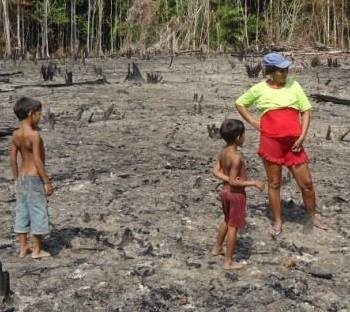
The Sierra del Lacandón National Park, spanning an area of 202,865 hectares, provides refuge to endangered species such as the scarlet macaw and the jaguar. However, the rate of deforestation in northern Guatemala is high due to encroaching settlements, forest fires, illegal logging, and cattle ranching. The project aims at reducing deforestation in the Sierra del Lacandón National Park, supporting the development of national and international legislation to adequately include the conservation of biodiversity and poverty reduction in forest conservation and climate change mitigation.
Sustainability Development Goals of the Project
Environmental, economic and social benefits of the project, related with the sustainable development goals of the United Nations:
NO POVERTY
Through the project activities such as adjustment of land uses and land use rights, sustainable farming and livestock familiar management systems, and diversification and use of communal forestry resources; the communities will increase their incomes and will improve their quality of life. In addition, the School of agroforestry promoters will enhance sustainable agriculture practices in the communities, which will improve the productivity of the family management systems.
ZERO HUNGER
The project strengthens decision-making and capabilities of communities, especially the operational capacity of forest adaptation through the workshop developed. Project activities will help to reduce population vulnerability to food insecurity through implementation of alternative productive activities.
GOOD HEALTH AND WELL-BEINGThe project activities also consider the transfer on knowledge to the communities inaspectsrelatedtohealthandwelfareandtheirrelationwithdailypractices,likethe awarenessaboutsexualandreproductiveknowledgeandfacilitatestheaccessto measures of family planning and on water management, including the management of human waste and use of latrines.
QUALITY EDUCATIONSThe project supports the development of sustainable economic and livelihoods alternatives through training and technical workshops; enhancing local administrative capacity, leadership capacity and environmental awareness through training activities. One of the main activities is to invest in education that leads to lower necessities for deforestation which is covered by the strategy of “Community dialog, education and capacitation”.
GENDER EQUALITYThe project activities benefits women through the establishment and reinforcement of a program of micro-credits where in the first phase, the program has achieved a total of 16 beneficiary families, with women as leaders, who have done business activities with a return rate of 100%. Moreover, the project activities build and strengthen the management capabilities of the Women’s Committee of Ramon (Brosimum alicastrum).
DECENTWORK AND ECONOMIC GROWTHThe project activity promotes the diversification of employment and income beyond agriculture, such as identification of new NTFP. As standard practice, the project will monitor household-income class and gender of any direct beneficiary of the project’s activities.
CLIMATE ACTION
The climate objectives is covered through the implementation of activities to reducedeforestationandforestdegradationbydecreasingillegaltimberextraction and assuring legality of land use right through forest sustainable management. These activities will help reduce GHG emissions and will increase carbon stocks over time. It is expected that the project reduce an average annual of 238,875 tCO2e in a project area of 45,288.81 ha.
LIFE ON LAND
It is expected that the populations of endemic and endangered species will increase, native species will be planted restoring the ecosystem for fauna and flora communities. This objective will be achieved through the main strategy of “Forest protection and biodiversity programs” and “Diversification and use of communal forestry resources”. Conservation of threatened species as Jaguar (Panthera onca), Tapir (Tapirus bairdii) and Pecari (Tayassu pecari) lies at the core of the project’s activities. The project activities include reforestation with native species also in IUCN Red list like Swietenia macrophylla and Cedrela odorata.
Project Details
- LocationGuatemala
- IndustryForestry
- CO2 Reduction238,875 CO2 Tons per year
- StandardVCS